Inspiring the future
0%
USA 250 Exhibition • Georgia on My Mind
Frederick Hart: Heroic Spirit
The Sculpture of an American Master
Semiquincentennial 1776–2026
Millennium Gate Museum
As America marks its 250th anniversary, the Millennium Gate Museum presents its cornerstone exhibition celebrating one of Georgia's greatest figurative sculptors.
Exhibition Spotlight
Experience the Heroic Spirit
Watch the featured video exploration of Frederick Hart's monumental works, legacy, and artistic philosophy.
Cornerstone Exhibition
The Exhibition
As America marks its 250th anniversary — the Semiquincentennial, 1776–2026 — the Millennium Gate Museum presents its cornerstone exhibition for the occasion: Frederick Hart: Heroic Spirit — The Sculpture of an American Master.
Part of the museum's USA 250 program, Georgia on My Mind, the exhibition honors Georgia's place as the last established of the thirteen original colonies by celebrating one of its own. Drawn from the permanent collection, the works on view — in bronze, resin, and cast stone — trace Hart's lifelong devotion to beauty, the heroic, and the sacred.
A Georgian Sculptor & A Georgian President
A central theme is the thread connecting two native Georgians: Frederick Hart and President Jimmy Carter. Among the exhibition's most powerful images is President Carter's flag-draped casket at Washington National Cathedral, framed beneath Hart's monumental Ex Nihilo — a Georgian sculptor's Creation watching over a Georgian president's farewell.
Ex Nihilo — Washington National Cathedral, Washington D.C.
Master Biography
About Frederick Hart
Frederick Elliott Hart (1943–1999) was born in Atlanta, Georgia, and rose from unlikely beginnings to become one of the most celebrated figurative sculptors of the twentieth century.
Early Life & Civil Rights
His mother died when he was an infant, and his path to art was anything but conventional. Admitted to the University of South Carolina as a teenager, he was expelled after taking part in a civil rights demonstration — reportedly the only white student to do so — and left the South for Washington, D.C.
Washington National Cathedral
In Washington he found his calling. He studied at the Corcoran School of Art and, in 1967, took a job as a mail clerk at Washington National Cathedral for a single purpose: to be near the Italian master carvers working there. He persuaded master carver Roger Morigi to take him on as an apprentice, earning the rank of stone carver.
The West Façade Commission
In the early 1970s, the Cathedral held an international competition for sculptures of its west façade on the theme of Creation. Hart won the commission in 1974. The centerpiece, Ex Nihilo (“out of nothing”), depicts human figures emerging from a swirling void — one of 20th-century America's most significant religious art commissions.
Public Monuments & Medium Innovation
Hart is equally known for The Three Soldiers, the bronze servicemen he created for the Vietnam Veterans Memorial. Standing in quiet dialogue with Maya Lin's wall, the figures gave the memorial a human, representational counterpoint and remain among the most visited public sculptures in the nation.
Among his other major works is the statue of President James Earl Carter on the grounds of the Georgia State Capitol — a fellow son of Georgia, and a link the museum's exhibition draws out.
Late in his career, Hart pioneered sculpture cast in clear acrylic resin, a luminous medium he made his own. A devout convert to Roman Catholicism, he regarded his talent as a gift and believed art should be “a majestic presence in everyday life.” At a time when abstraction dominated American art, he insisted on beauty, the human figure, and the heroic — a conviction championed by writer Tom Wolfe. Hart died in 1999 and was posthumously awarded the National Medal of Arts in 2004.
Exhibition Masterpieces
Featured Works
Explore core masterworks by Frederick Hart on view and in reference as part of the USA 250 exhibition.
01
Cast Stone · Creation Relief
Ex Nihilo
Washington National Cathedral; the central Creation relief depicting human figures emerging from a swirling void.
View Detail →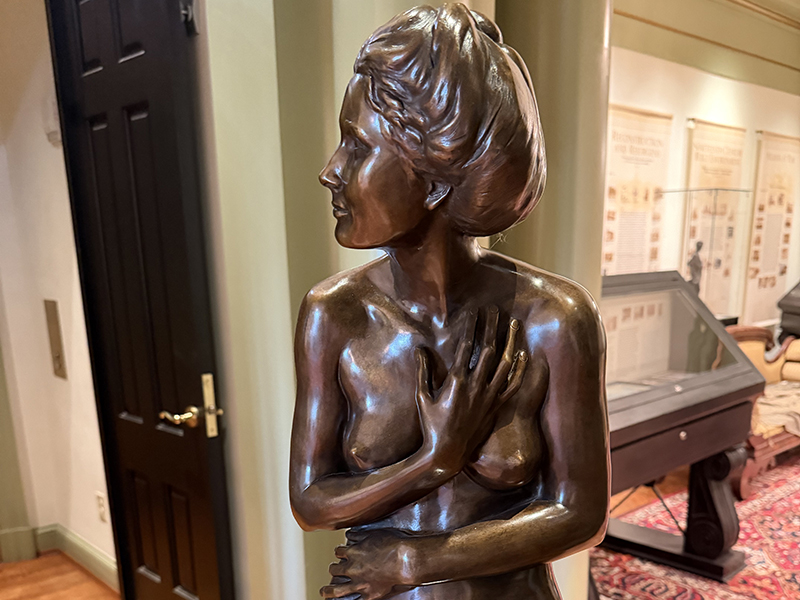 02
Bronze · National Monument
The Three Soldiers
Vietnam Veterans Memorial, in dialogue with Maya Lin's wall, providing a representational human counterpoint.
View Detail →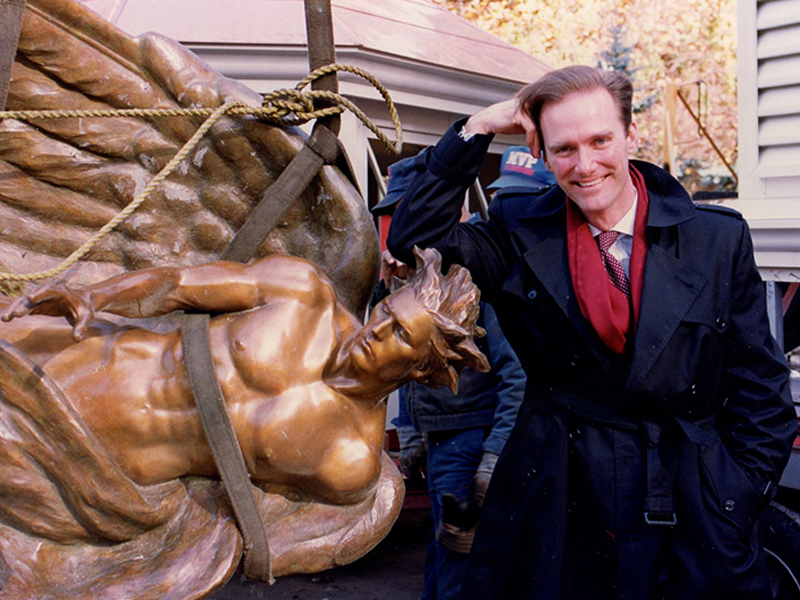 03
Bronze · 1994
James Earl Carter Presidential Statue
Georgia State Capitol grounds, Atlanta (bronze, 1994), celebrating Georgia's 39th President of the United States.
View Detail →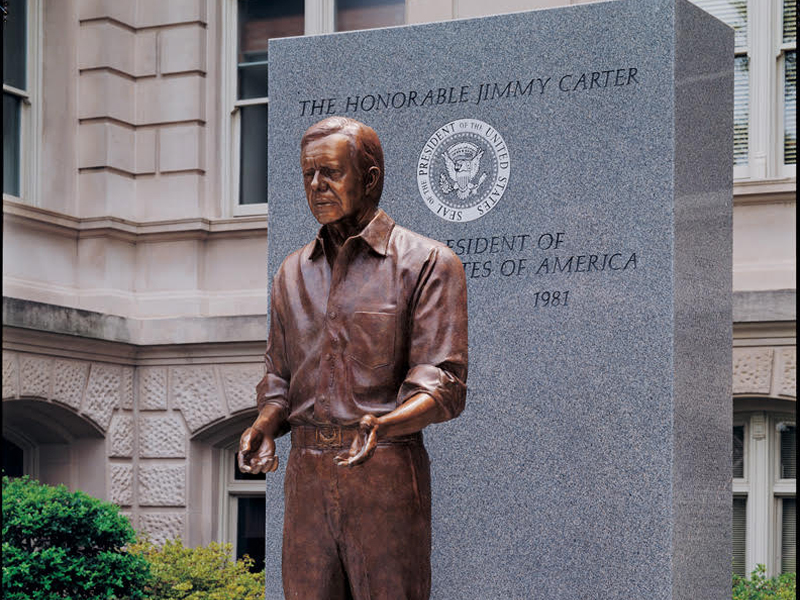 04
Marble · 1996
Richard B. Russell, Jr. Memorial Statue
Rotunda of the Russell Senate Office Building, Washington, D.C. (marble, 1996).
View Detail →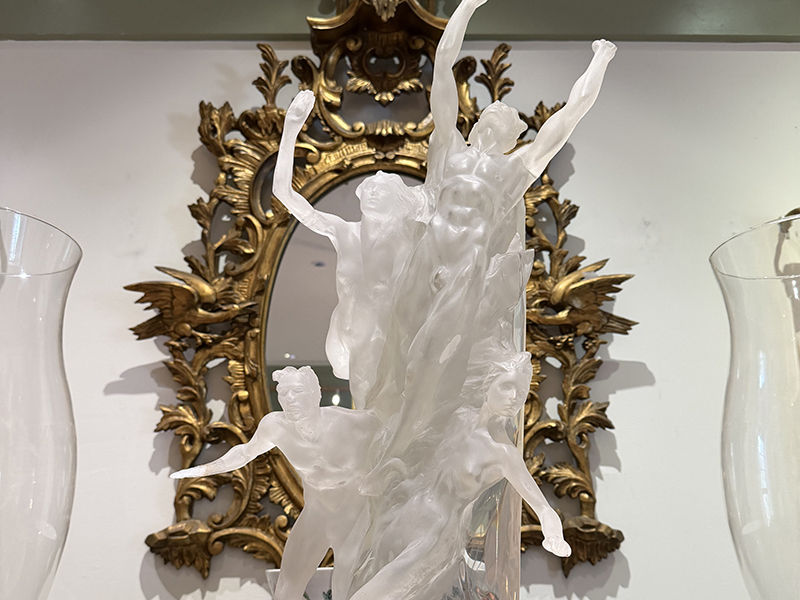 05
Bronze · Monumental Angel
The Herald
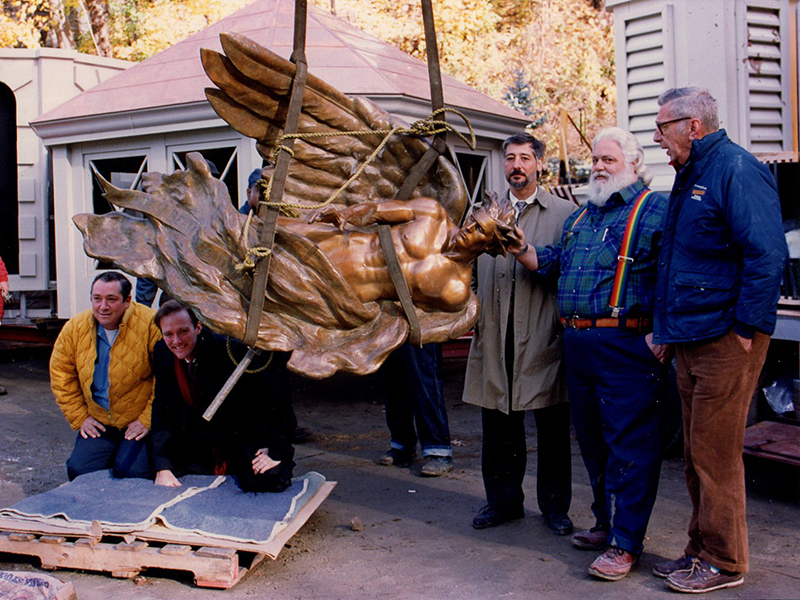
Monumental bronze angel, Newington-Cropsey Foundation, Hastings-on-Hudson, New York.
View Detail →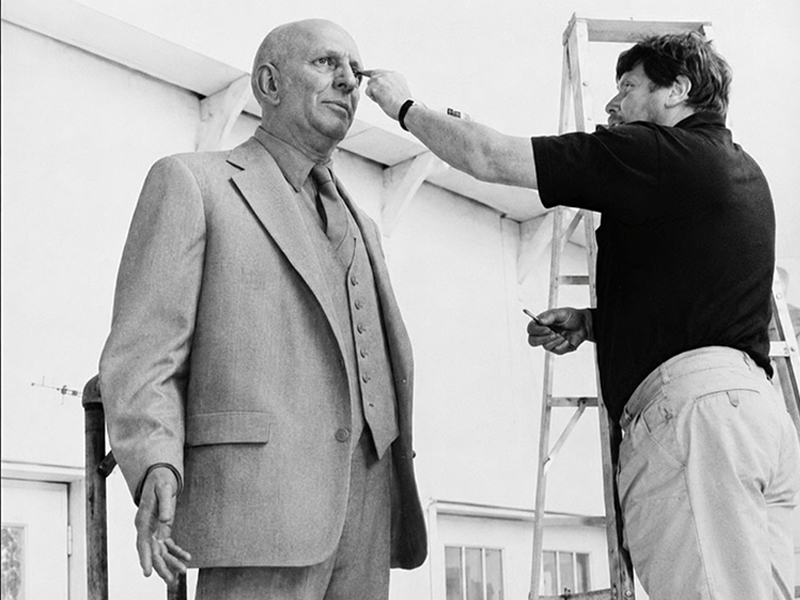 06
Acrylic Resin · Figurative
Ladies of Odessa
Pioneering clear acrylic resin sculpture capturing light, grace, and timeless human figure.
View Detail →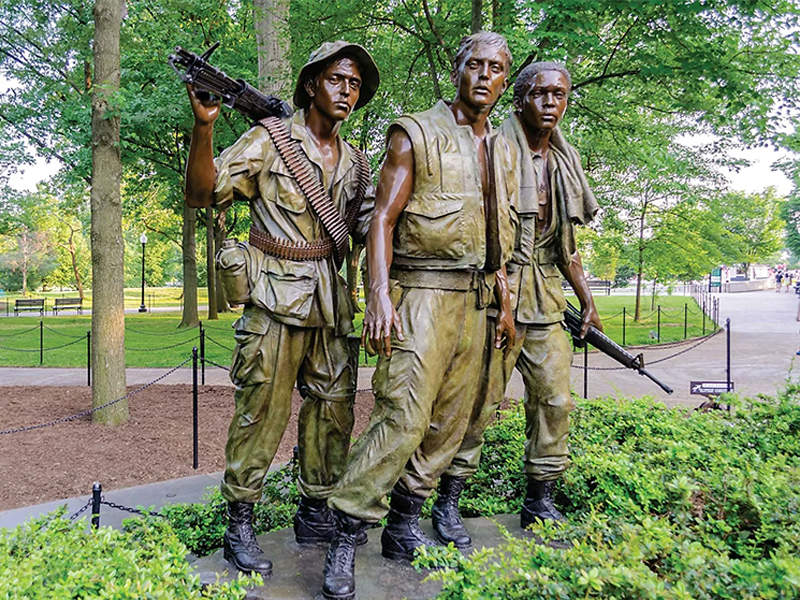 07
Sculptural Model · 1996 Games
Olympic Athletes Maquette
Model for an unrealized statue and fountain honoring American Olympic athletes, proposed for the 1996 Atlanta Games.
View Detail →USA 250 Program
Plan Your Exhibition Visit
Join us at the Millennium Gate Museum to experience Frederick Hart: Heroic Spirit — a landmark tribute to beauty, history, and American master sculpture.